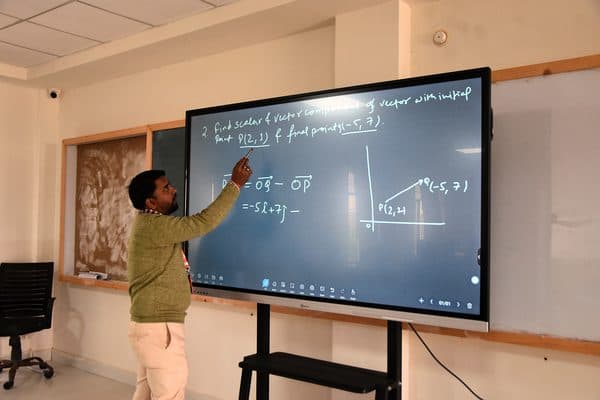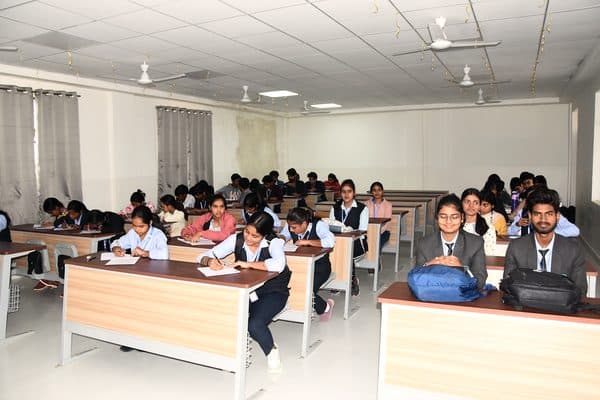
If you want to teach at the primary-school level (classes 1–5) in Uttar Pradesh and you've completed 12th grade, D.El.Ed at BITE is the shortest legitimate path. Two years, NCTE-recognised, SCERT-affiliated, and specifically designed for primary-level classroom competence. Here's what to know for 2026-27.
What is D.El.Ed?
Diploma in Elementary Education (D.El.Ed), also called Basic Training Certificate (BTC) in UP, is a 2-year diploma programme for primary-school teaching. It was recognised by NCTE at BITE on 23 March 2016 and affiliated to SCERT on 15 November 2016.
D.El.Ed is different from B.Ed in three important ways:
- Target level: Primary (classes 1–5). B.Ed prepares candidates for secondary / senior-secondary levels (classes 6–12).
- Eligibility: 12th pass. B.Ed requires a bachelor's degree.
- Duration: 2 years diploma. B.Ed is also 2 years but is a post-graduate degree.
Who should consider D.El.Ed over B.Ed
- If you want to be a primary teacher, D.El.Ed is more directly aligned with the skill set.
- If you want to start earning / teaching faster after 12th, D.El.Ed skips the bachelor's step.
- If budget is a constraint, D.El.Ed's fee structure is lighter than a bachelor's + B.Ed combined.
Eligibility
- 10+2 (any stream) with minimum 50% aggregate
- Age 18+ at time of admission
- Reservation policy follows UP state norms
Curriculum
The D.El.Ed syllabus covers:
Year 1:
- Child Development and Pedagogy
- Mathematics for Elementary Teachers
- Language teaching (Hindi + English)
- Environmental Studies (EVS) pedagogy
- Contemporary Indian Society and Education
Year 2:
- Teaching of specific subjects (Mathematics, EVS, Languages)
- Assessment of learners
- Inclusive education
- School internship — 100+ days in partner primary schools in and around Varanasi
- Community engagement project
UPTET Paper I preparation
UPTET Paper I (for primary teachers) is the direct qualifier after D.El.Ed. BITE's D.El.Ed curriculum is designed with Paper I's question pattern in mind — the Child Development, Mathematics, EVS, and language comprehension sections overlap significantly with coursework.
Historical pass rates for BITE D.El.Ed cohorts on UPTET Paper I are comparable to B.Ed CTET pass rates (~78%).
Career pathways
After D.El.Ed: 1. Primary teacher in UP government schools (via UP Basic Education Board recruitment) — most common path. 2. Primary teacher in CBSE-affiliated private schools — requires CTET Paper I. 3. Private tuition / coaching at primary level — self-employment route. 4. Continue to B.Ed — D.El.Ed graduates with a subsequent bachelor's can add B.Ed on top, qualifying for upper-primary and higher levels.
What's unique about BITE's D.El.Ed
Three structural choices:
1. SCERT affiliation with MGKVP layering. D.El.Ed is primarily a state-level qualification (SCERT), but BITE's layered MGKVP affiliation gives graduates an institutional recognition footprint that's rare for pure D.El.Ed colleges.
2. Shared campus with B.Ed and D.Ed trainees. D.El.Ed students aren't on a separate "junior" track — they share the same campus, faculty, and facilities as B.Ed and degree students. Cross-programme exposure adds depth.
3. Strong school-partnership network. BITE has active partnerships with primary schools across Varanasi district for internship placement. First-year trainees visit these schools for observational sessions; second-year trainees do full teaching assignments.
Fees and seat allocation
Fee structure for the current cycle is on the fee structure page. Intake is 50 seats per cycle. Admissions are merit-based on 10+2 percentage; no separate entrance exam.
When to apply
Admissions for 2026-27 are open. Deadline: 31 July 2026. Apply via the admissions portal or visit the campus directly for walk-in admission counselling.