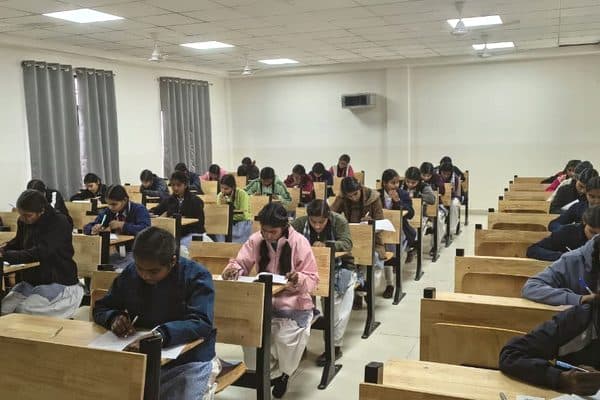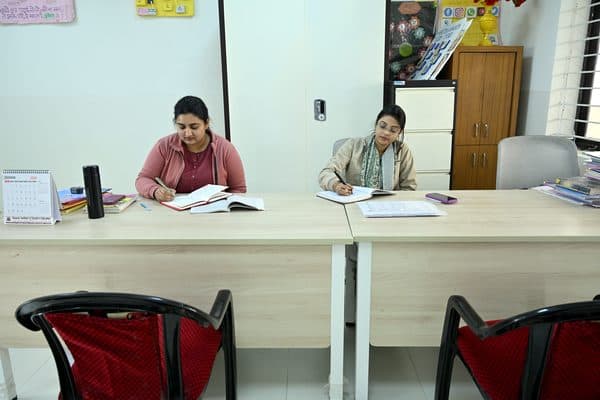
B.Ed is often framed as a single-track degree — "you become a school teacher." That framing is out of date in 2026. A B.Ed graduate today has seven or eight legitimate career paths, some traditional and some that didn't exist a decade ago. This is a realistic map.
Track 1: Government school teaching (the traditional path)
Still the most common outcome, and for good reason: pay, pension, tenure, and the social respect that comes with being a master-ji or mam in an Indian community. The sequence is: 1. Clear CTET (for central / KVS / NVS roles) or UPTET (for UP state roles). 2. Apply to notifications from UP Basic Education Board, KVS, NVS, UPPSC, or neighbouring state PSCs. 3. Clear the recruitment exam + document verification. 4. Join and serve the probation period (usually 2 years).
Timeline from B.Ed completion to joining: typically 18–30 months. This is why many students overlap CTET/UPTET preparation with their final B.Ed semester.
Track 2: Private school teaching
CBSE and ICSE schools in Varanasi, Lucknow, Delhi-NCR, and metros actively recruit B.Ed graduates. BITE's placement cell facilitates on-campus visits from 40+ partner schools. Timeline: offer letters typically arrive 1–3 months after B.Ed completion. Compensation is usually lower than eventual government roles but higher than entry-level private non-teaching jobs.
Track 3: Higher studies
- M.Ed — a natural extension; qualifies you for teacher-training institutes and education-policy research.
- MA (Education) — academic track toward Ph.D. and university-level teaching.
- Ph.D. in Education — 3–5 year commitment; essential for college / university teaching roles.
A Ph.D. in Education opens doors to curriculum-design consulting, policy think tanks (NIEPA, state SCERTs), and university faculty positions.
Track 4: EdTech
The post-2020 EdTech boom created a new B.Ed career track that the previous generation didn't have. Roles include:
- Curriculum designer at platforms like Byju's, Unacademy, Vedantu, Physics Wallah
- Content writer for educational YouTube channels, NCERT-aligned publishers, test-prep platforms
- Onboarding trainer for EdTech sales teams selling educational products
- Video presenter / subject expert for recorded classes
Compensation is often higher than entry-level school teaching but less stable. EdTech has gone through significant layoffs in 2023–24; the sector is now professionalising.
Track 5: Educational content and publishing
Traditional publishers (NCERT, Oxford, Pearson, Arihant, RS Aggarwal) continue to hire B.Ed graduates as:
- Textbook content authors
- Question-bank writers
- Editorial reviewers
- Workbook designers
This is steady, lower-profile work with flexibility for part-time or freelance arrangements.
Track 6: Competitive exams beyond teaching
A B.Ed is a strong foundation for:
- UPSC Civil Services — several aspirants take B.Ed as a "Plan B" degree before UPSC preparation; the education-policy GS-2 questions overlap with B.Ed coursework.
- State PCS — UPPCS, BPSC, and others.
- Bank PO and SSC — general competitive exams where an education degree plus English proficiency are assets.
- UGC-NET in Education — qualifies you for Assistant Professor roles and JRF (Junior Research Fellowship) research stipends.
Track 7: Corporate L&D and training
Large companies run in-house learning & development departments. Entry-level L&D roles often prefer candidates with a teaching / training background. Industries hiring B.Ed graduates into L&D include IT services, banking, retail chains, and healthcare.
Track 8: Entrepreneurial — tutoring and coaching institutes
Many B.Ed graduates eventually start their own coaching institutes, tutoring services, or online tuition businesses. The economics can be strong in tier-2 and tier-3 cities where the demand for quality teaching outstrips supply. Starting costs are low (a room, whiteboards, digital marketing); the hard part is building a reputation over 2–3 years.
What makes BITE graduates stand out
BITE's B.Ed is NCTE-recognised, MGKVP-affiliated, and UGC-equivalent — the credentials clear every employer's filter. But credentials alone don't differentiate; what does is the quality of the practicum, the depth of the faculty mentorship, and the strength of the alumni network. BITE's 120+ days of school internship means graduates have real teaching experience from day one; the 5000+ alumni network opens doors in specific UP districts where BITE has a historical presence.
What to do in your final B.Ed semester
1. Start CTET / UPTET preparation three months before the exam date — don't wait until after graduation. 2. Update your LinkedIn profile with coursework, practicum school, and pedagogy subjects. 3. Attend the placement cell's mock interviews — even if you're planning government teaching, the practice translates to any recruitment exam interview. 4. Decide on your path by semester end — government vs. private vs. higher studies. Each path has different immediate next steps. 5. Stay connected with your faculty mentor — the recommendation letters they write are often better than anything you can write yourself.
A B.Ed today is not a narrow degree. It's a broad educational foundation that opens multiple directions. The path you pick is yours to decide.